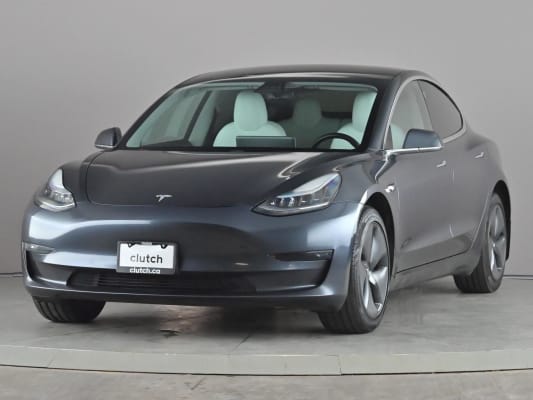
The Canadian EV market has spent the past year in correction mode. Subsidies collapsed, then partially returned. Tesla's dominance evaporated. Depreciation accelerated. And in 2026, a wave of lease returns from the 2022-2023 boom is hitting dealer lots.
Two new forces just changed the calculus: a Canada-China trade deal opening the door to 49,000 Chinese-made EVs, and a returning federal rebate that excludes them. For used EV buyers, these policy changes will push prices down further, but it will take time for it to play out.
In this report we dive into the policy landscape, national transaction data, and practical guidance for prospective EV buyers in Canada.
Part 1: The Forces at Play
Six dynamics are reshaping the Canadian used EV market: the Canada-China trade deal, the collapse of federal and provincial subsidies, Tesla's brand crisis, a wave of lease returns, new affordable models hitting showrooms, and the broader macro environment. Here's how each one is playing out.
1.1 The Canada-China Deal: What It Actually Means
In mid-January, the Canadian automotive market pivoted. The January 16 "Agreement-in-Principle" between Ottawa and Beijing replaced the 100% surtax on Chinese EVs with a tariff-rate quota: 49,000 Chinese-made electric vehicles can now enter Canada annually at the standard 6.1% duty rate.
The Mechanics
- China drops retaliatory tariffs on Canadian canola; Canada opens a controlled pathway for Chinese EVs
- 49,000 unit cap in 2026, scaling to ~70,000 by 2031
- Affordability mandate: by 2030, 50% of quota imports must be priced under $35,000
- Anything over quota still faces the full 100% surtax
Who Moves First
- Tesla: Shipped ~44,000 units from Shanghai in 2023 before the surtax hit. Can flip sourcing back overnight. No new approvals needed. The quota practically has their name on it.
- Lotus: Already certified in 2023. Announced ~50% price cut on the Eletre the day after the deal. Deliveries confirmed for March 2026.
- Volvo/Polestar: China-built EX30 revival now viable. Polestar may split supply chains (Korea for US, China for Canada).
- BYD: Listed in Transport Canada's Appendix G, while competitors (Nio, Xpeng) are locked out by the 2025 application pause. But Appendix G caps them at 2,500 units. Mass volume requires Appendix F status, a 6-12 month process. Real scale is a 2027 story.
The Political Risk
- The US maintains a 100% tariff wall for Chinese vehicles. Canada is now diverging from North American alignment.
- Automaker lobby warns Canada could become a "leakage point" for Chinese goods into the US.
- USMCA 2026 review will likely demand strict end-user certification to prevent re-export.
What This Means for Used EVs
The $35,000 affordability mandate puts new Chinese imports in direct competition with used EVs in that price bracket. But there's a wrinkle: the federal rebate announced February 5 excludes Chinese-origin vehicles. Only EVs from countries with existing free-trade agreements qualify.
That changes the math. A BYD Dolphin at $32,000 (no rebate) competes with a 2027 Bolt at $35,000 effective ($40k sticker minus $5k rebate). The Chinese price advantage is narrower than sticker prices suggest.
Timing still matters. Tesla can move quota volume now; everyone else faces 12-18 months of regulatory friction. The used market has a window before full pricing pressure lands, and domestic new EVs now have a $5,000 rebate cushion that Chinese imports don't.
1.2 Policy Whiplash: Incentive Resurgence
For nearly a decade, Canadian EV adoption ran on subsidies. Federal rebates, provincial top-ups, and escalating sales mandates created a predictable growth trajectory. 2025 saw those incentives vanish, but recent changes have brought them back.
- Transport Canada paused the program on January 12, 2025, declaring funds "fully committed" months ahead of schedule
- The $5,000 incentive vanished overnight. December 2024 saw a rush of buyers trying to beat the deadline, pulling demand forward and leaving Q1 2025 in a crater
- Thirteen months later, on February 5, 2026, Ottawa announced a replacement: a $2.3 billion EV affordability program launching February 16
- The new rebate mirrors the old structure: up to $5,000 for BEVs, $2,500 for PHEVs, capped at vehicles under $50,000
- The key difference: only vehicles from countries with free-trade agreements qualify. Chinese EVs entering under the 49,000-unit quota are excluded.
- Unlike the old program, this one phases down annually. Buyers who wait lose $1,000-$1,500 per year depending on powertrain
- Eligibility cap is now based on transaction value (what you actually pay after fees) rather than base MSRP, set at $50,000
- Critical exception: Canadian-made EVs qualify regardless of price. A domestically-built model at $60,000 gets the rebate; an imported one at $50,001 doesn't
- Geopolitical filter: Only vehicles from countries with existing free-trade agreements qualify. Chinese EVs entering under the 49,000-unit quota are explicitly excluded
- Government projects 840,000 new EVs incentivized by 2030
- For the used market: buyers who were waiting for incentives now have them, which may pull demand away from used in the short term
- A Quebec buyer in early 2025 faced an effective $8,000 price increase vs late 2024 (federal + provincial combined)
- Quebec EV sales dropped over 50% in Q1 2025
- The province that drove nearly half of Canada's EV adoption is now dragging down national numbers
BC Go Electric: Paused and Narrowing
- Program exhausted mid-2025 due to "higher than expected demand"
- Eligibility narrowed through income and vehicle price caps
- Spring 2026 legislative review signals the province may soften its aggressive 90% ZEV target for 2030
The ZEV Mandate: Repealed and Replaced Gap
- Federal regulation required 20% of 2026 sales to be ZEVs while actual trajectory was closer to 10%, a compliance gap of roughly 110,000 vehicles
- September 2025: PM Carney suspended the penalty mechanism pending review
- February 2026: the mandate was officially repealed. In its place, new greenhouse gas emission standards targeting 75% EV sales by 2035 and 90% by 2040
- The credit market had already crashed. Automakers who banked on selling surplus credits (Tesla, Hyundai) lost a revenue stream; laggards (Ford, Stellantis) got a reprieve
What This Means for Used EVs
The 13-month rebate gap did real damage. Without incentives, new EVs effectively cost 10-15% more. At 7%+ interest rates, monthly payments became unworkable for many buyers. New EV demand dissipated, and many buyers looked to the used market.
The February 2026 rebate restores the federal piece, but the landscape has changed. Provincial incentives are still winding down. And the rebate's free-trade requirement creates a two-tier market: domestic and free-trade-origin EVs get the $5,000 boost; Chinese imports don't. Used EVs in the sub-$35k bracket now face pressure from both directions: cheaper new domestic EVs above, and unsubsidized Chinese imports below.
1.3 The Tesla Factor
For years, "EV market" and "Tesla" were basically synonyms in Canada. That's over. Tesla's decline is now the single biggest drag on national EV adoption numbers.
The Collapse in Numbers
- Canadian new Tesla sales dropped 63.5% in 2025 vs 2024
- Quebec (historically their stronghold): 524 units in Q1 2025 vs 5,097 in Q4 2024. That's a nearly 90% drop.
- Market share fell from over 40% in 2022 to single digits by mid-2025
- GM overtook Tesla as Canada's #1 EV seller in Q1 2025, driven by the new Equinox EV and Blazer EV models
The Cause: Brand Toxicity
- The core Canadian EV demographic skews urban, educated, and climate-conscious
- Musk's political alignment created a mismatch with this buyer profile
- Purchasing a Tesla shifted from an environmental signal to a political statement many Canadians don't want to make
- Buyers are actively avoiding the brand, not simply choosing competitors
The Price War Damage
- Tesla's aggressive 2023-2024 price cuts on new vehicles destroyed residual values for existing owners
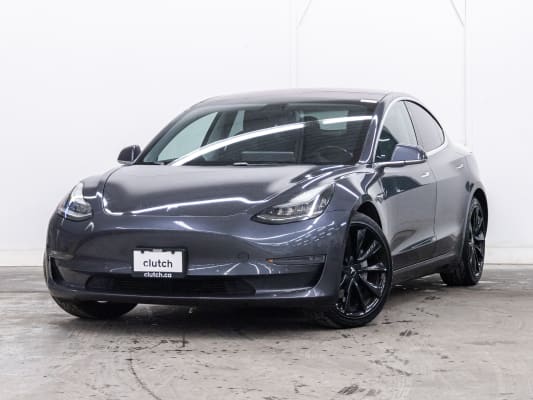
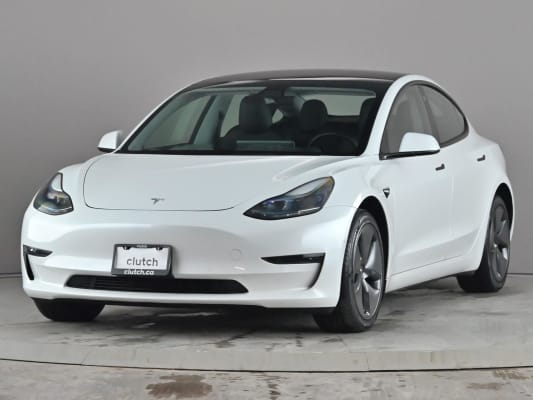
- A 2022 Model 3 Long Range purchased at ~$65,000 is now trading in the mid-$20k range wholesale
- Owners sitting on $15-20k in negative equity can't afford to trade in
- The upgrade cycle that fueled Tesla's growth is frozen
The Used Market Flood
- 3-year leases from 2022-2023 are returning now
- Lease residuals were set at 55-60% during peak optimism; actual values are far lower
- Buyout makes no financial sense, so nearly all vehicles are being returned
- Dealers are refusing inventory; finance arms are sending units to auction
- Days-to-turn is lengthening as supply overwhelms demand
What This Means for Buyers
The data in Part 2 will show exactly how Tesla pricing is moving relative to other EVs. The question: is this a buying opportunity, or a falling knife? The answer depends on whether you think the brand damage is priced in or still unfolding.
1.4 The Supply Wave
While the used Tesla market has been in freefall, other brands aren't faring much differently.
The Timing Problem
- Late 2024 saw record new EV sales as buyers rushed to capture rebates before they expired
- Those vehicles, plus 3-4-year leases from 2022-2023, are now arriving in the used market simultaneously
- This isn't a Tesla-specific dynamic. Hyundai, Kia, Ford, and GM EV lease returns are all landing at once.
- The market is absorbing a cohort of vehicles that were originated under very different conditions (subsidies, lower rates, peak optimism)
The ICE Shortage Flip
- 2022 was a low-sales, low-lease year for gas vehicles due to the chip shortage
- Fewer gas vehicles leased then means fewer returning now
- 2026 inventory composition is unusually EV-heavy
The Auction Flood
- Finance arms (Ford Credit, GM Financial, captive lenders) are routing returned EVs directly to auction
- Dealers are hesitant to buy at auction given soft retail demand and carrying costs
- Wholesale prices are falling as auction supply outpaces dealer appetite
- This creates a feedback loop: falling wholesale prices erode trade-in values, which constrains new sales
What This Means for Buyers
More supply chasing constrained demand is a buyer's market. Inventory is building, dealers are motivated, and wholesale pressure is translating to retail. If you're flexible on model and timing, this is the window to buy a used EV.
1.5 New Models & Market Expansion
While the used market absorbs a supply wave, the new market is about to get crowded. Roughly 35 new EV models are expected to launch in Canada in 2026. That volume of choice changes the competitive dynamics for both new and used.
The Affordability Push
- 2027 Chevrolet Bolt: Returns on GM's Ultium platform at $39,999 — or $34,999 effective with the new federal rebate. Faster charging than its predecessor, NACS port standard. This sets the domestic price floor and undercuts most Chinese imports that won't qualify for the incentive.
- Kia EV5: Arriving Spring 2026 in the mid-$40k range. Compact SUV aimed at the RAV4/CR-V buyer, not the luxury EV crowd. Kia is flooding dealers with inventory rather than constraining supply.
- Hyundai, Toyota, Subaru: All launching crossover EVs in the $45-55k range. The "mainstream" segment is finally getting populated.
Chinese Entrants: The Timeline Reality
- BYD has the product lineup (Seagull, Dolphin, Atto 3) but remains capped at 2,500 units until Appendix F status is achieved, and a distribution network and service/warranty solution are secured
- Other Chinese brands (Nio, Xpeng, Xiaomi) are locked out entirely by the 2025 application pause
- Mass Chinese volume is a 2027 story at earliest
- And when it arrives, there's a structural disadvantage: the new federal rebate excludes Chinese-origin vehicles. A $32k BYD will compete against a $35k effective Bolt, not a $40k sticker price
What This Means for Used EVs
New affordable EVs reset buyer expectations. A shopper considering a used 2022 Ioniq 5 at $38k will now cross-shop a new 2027 Bolt at $40k. Used EVs in the $35-45k bracket face direct competition from new for the first time at scale.
The psychological effect matters too. Buyers who might have purchased used today are waiting to see what arrives. That hesitation is showing up in longer days-on-lot and softer pricing.
1.6 Macro Context
Policy and product don't exist in a vacuum. The broader economic environment is shaping buyer behaviour in ways that compound the challenges already facing the EV market.
Interest Rates: The Monthly Payment Problem
- Auto loan rates remain elevated: 6.5-7.0% for new vehicles, 7.99%+ for used
- EVs carry higher average sticker prices than gas equivalents, making them more rate-sensitive
- Without rebates to offset the price gap, monthly payments have become unworkable for many buyers
- Dealers are paying record floorplan interest to hold slow-moving EV inventory, adding pressure to discount
The Hybrid Bridge
- Hybrid (HEV) market share hit 16.9% in Q3 2025, surpassing the entire ZEV segment
- Toyota's cautious BEV strategy is looking prescient; their hybrid lineup is selling as fast as they can build it
- Ford and GM are scrambling to increase hybrid production capacity
- For a rate-sensitive Canadian buyer facing cold winters and charging uncertainty, hybrids offer the "safe" choice: fuel savings without the range anxiety, financing stress, or depreciation risk
Consumer Confidence: Clearer, But Still Complicated
- The February 5 announcement provides some clarity: rebates are back, the mandate is replaced with softer targets, and $1.5 billion is earmarked for charging infrastructure
- But provincial incentives are still winding down, US tariff uncertainty looms, and the Chinese import question remains unresolved
- Buyers still face the same core question: buy a used EV now at corrected prices, wait for further depreciation, or go hybrid?
- Slower sales lead to more inventory, which leads to price cuts, which convince waiting buyers they were right to wait
- The result: even well-priced, desirable inventory is sitting longer than it should
What This Means for Used EVs
High rates make financing harder. Hybrids are siphoning demand. Buyer hesitation is extending days-on-lot. For sellers, this means pricing pressure continues. For buyers, it means leverage and selection, but also the psychological challenge of pulling the trigger when the market feels like it's still moving.
Part 2: By the Numbers
Now that we've covered the macro picture, we can jump into what's actually showing up in the transaction data: provincial trends, Tesla vs non-Tesla dynamics, which models are moving, and where the deals are.

2.1 Provincial Divergence: Where Used EVs Actually Sell
Canada doesn't have one EV market. It has three distinct ones, plus everywhere else. BC, Quebec, and Ontario each operate under different conditions, and the data reflects that.
The Big Picture
- Quebec remains the largest used EV market, consistently accounting for the highest share of national sales
- Ontario has been gaining ground steadily throughout 2024 and 2025, now approaching Quebec's share
- BC experienced significant volatility in 2025, driven by policy changes
- Rest of Canada remains a small fraction of total volume
BC: The PST Cliff
The most visible story in the data is BC's sharp swing in early-to-mid 2025.
- BC's Provincial Sales Tax exemption for used ZEVs was set to expire in 2027
- The government accelerated the expiry to April 30, 2025
- The result: a rush of buying in Q1 2025 as buyers moved to beat the deadline, followed by a sharp drop after May 1 when used EVs became subject to standard PST
- BC's share of national used EV sales spiked to its highest point in early 2025, then fell sharply through mid-year
- By late 2025, volume stabilized but at a lower level than the pre-announcement baseline
Quebec: From New to Used
- New EV sales in Quebec collapsed after the Roulez Vert phase-down in Q1 2025
- New EV demand shifted to the used market, where prices were lower
- Fewer new EV sales meant fewer EV trade-ins, which limited used supply in Q2
- This dynamic caused used EV prices to rise, while other provinces went down
- Quebec still drives the largest share of national used EV volume, though Ontario and BC are closing the gap
Ontario: Slow and Steady
- Ontario's share of national used EV sales has grown consistently since early 2024
- The province started from a lower adoption base than BC or Quebec
- Ontario cancelled its EV incentive program in 2018, so growth has been organic and gradual rather than policy-driven
What This Means for Buyers
- BC: The PST cliff created a correction. Prices dropped after May 2025 as demand softened. Buyers in BC today face less competition than they did six months ago.
- Quebec: Strong used EV demand means inventory moves. Selection may be thinner, but resale confidence is higher.
- Ontario: A growing market with less pricing pressure than BC. More inventory arriving as the province catches up.
2.2 The Tesla Story, In Numbers
Part 1 described Tesla's brand collapse in the new car market. Here's what's showing up in used transaction data.
- Tesla's used market share actually increased through 2024, peaking in early 2025
- The decline came later in 2025, falling from 35.8% in January to 26.3% by January 2026
- Used market dynamics lag new sales. The new car collapse is now showing up in used, but with a delay.
- Tesla prices have dropped over four times faster than non-Tesla EVs
- A used Tesla is now cheaper on average ($38,747) than a used non-Tesla EV ($42,012)
- That's a full inversion from two years ago, when Teslas commanded a $5,000+ premium
- Model Y has dropped nearly $18,000 in two years
- Model 3 now averages just over $30k, approaching the sub-$35k threshold where Chinese imports will compete
- Model Y's steeper decline reflects weakening demand and a maturing market
What This Means for Buyers
The data suggests opportunity, with caveats.
- Tesla prices have corrected significantly and may be approaching a floor
- Finding Model 3s under $30k is now commonplace for older model years
- The risk: prices are still falling. Buying today could mean further depreciation if the brand damage continues
- The opportunity: brand image has no effect on vehicle quality – if you believe Tesla's decline is priced in, current levels represent great value relative to 12-18 months ago
2.3 What's Actually Selling
Tesla is losing share in the new market. But the used market tells a more nuanced story: Tesla volume is declining, but so are some legacy EVs. The growth is concentrated in newer non-Tesla crossovers.
The Decliners: Tesla and Legacy Budget EVs
- Model 3 volume down 28%, Model Y down 16%
- Nissan LEAF down 26%, Bolt EV down 45%, Bolt EUV down 52%
- The aging budget EVs are losing ground alongside Tesla
- These declines aren't just about brand sentiment. They reflect vehicles aging out of desirability.
The Growers: Non-Tesla Crossovers
- Ford Mustang Mach-E: +52% YoY
- Ford F-150 Lightning: +90% YoY
- VW ID.4: +82% YoY
- Cadillac LYRIQ: +81% YoY
- Chevy Equinox EV: +1,240% YoY (small base, new to market)
Buyers leaving Tesla aren't abandoning EVs. They're moving to newer crossovers from legacy brands.
The Middle Ground
- Hyundai IONIQ 5 and Kia Niro EV growing modestly (+13% and +38%)
- These hold share without explosive growth, suggesting steady demand rather than a surge
What This Means for Buyers
- Tesla and legacy budget EVs (LEAF, Bolt) have the most inventory and the softest pricing
- Non-Tesla crossovers (Mach-E, ID.4, IONIQ 5) are in higher demand, so expect less negotiating room
- The Equinox EV is the emerging wildcard: volume is growing fast as lease returns begin
- If you're flexible on brand, the best deals are where demand is weakest: Tesla and outgoing-generation budget models
2.4 The Affordability Question
The Canada-China deal mandates that 50% of quota imports be priced under $35,000 by 2030. Here's how the current used EV market stacks up against that threshold.
- Nearly half (47.6%) of used EVs already sell under $35k
- The largest single segment is $20k-$35k at 36.7%
- The sub-$20k segment is small but real, driven by aging LEAFs and Bolts
- Quebec's used EV market is already majority-affordable, but it took a big hit in 2025
- BC has trended upward sharply, partly due to the end of the PST exemption
- Ontario remains the least affordable market since it hasn’t been impacted by government incentives
The Trend: BC Moving Fast
- BC's sub-$35k share jumped nearly 9 percentage points over the past year
- The PST exemption expiry in May 2025 accelerated price corrections
- Quebec EV affordability crashed after Roulez-vert was scaled back
- Ontario has fluctuated but not shown consistent movement in either direction
What This Means for Chinese Imports
The $35k segment is where the pressure will land hardest. When BYD and others bring sub-$35k new EVs to market, they reset buyer expectations. Why buy a used Model 3 at $30,451 when a new BYD Dolphin is $32,000 with a full warranty?
The vehicles currently occupying this bracket face direct devaluation pressure:
- Used Tesla Model 3s (now averaging $30,451)
- Chevy Bolt EVs ($20,631)
- Nissan LEAFs ($17,288)
- Kia Niro EVs ($26,046)
Used EV prices will need to drop further to remain competitive against new alternatives. The sub-$35k share of the used market should grow, but not because supply is increasing. It grows because prices are falling.
What This Means for Buyers
- If you're shopping under $35k today, selection is better than it's ever been
- Quebec offers the deepest inventory in this bracket
- BC's correction post-PST expiry pushed prices down, but the tax will bite you
- Ontario buyers may need to expand their search radius or budget
- If you can wait 12-18 months, Chinese entry may push used prices lower still. If you need a car now, the current correction already offers value.
2.5 EVs vs Hybrids vs Gas: The Real Competition
Part 1 noted that hybrids surpassed EVs in new car market share. In the used market, EVs remain a small slice of total volume. But the pricing dynamics have shifted in an unexpected direction.
- Gas still dominates at over 90% of used sales
- Hybrids and EVs are both gaining, but from small bases
- Hybrids hold a larger share than EVs in the used market
- EVs dropped over $4,400 in two years while hybrids barely moved
- In January 2024, a used EV cost $1,360 more than a used hybrid on average
- In January 2026, a used EV costs $1,775 less than a used hybrid
- Gas prices have held flat, keeping a significant gap (~$8,000) below EVs
The Gap Is Narrowing
- The EV-to-gas price gap was $12,510 in January 2024
- That gap has shrunk to $8,018 in January 2026
- EVs are becoming more price-competitive with the broader market, driven by depreciation and supply pressure
What This Means for Buyers
- The "hybrid as safe choice" narrative holds for new cars, but the used market tells a different story
- Used EVs are now cheaper than used hybrids on average, and the gap is widening
- If your hesitation about EVs is price, the used market has corrected significantly
- Gas vehicles remain the cheapest option, but the premium for going electric has shrunk by a third in two years
Part 3: The Buyer's Playbook
If You Need a Car Now
The correction has created real value. Prices are down 10% over the past two years, 22% on Tesla. Inventory is high and diverse. Dealers are motivated.
- Best deals are where supply is most oversupplied: Tesla Model 3, Bolt EV, Nissan LEAF
- Non-Tesla crossovers (Mach-E, ID.4, IONIQ 5) aren't as oversupplied, so expect less flexibility on price
- Negotiate hard. Days-on-lot are up, and sellers know it.
- If you're cross-shopping new: the federal rebate returns February 16. On an eligible vehicle under $50k, that's $5,000 back. Factor that into your used vs new calculus.
If You Can Wait 12-18 Months
Prices may soften further as more lease returns hit the market. Chinese imports are coming, but their impact is blunted by the rebate exclusion.
- Watch for BYD achieving Appendix F status — but remember, their vehicles won't qualify for the $5,000 federal rebate
- The price gap between a new Chinese EV and a rebate-eligible domestic narrows significantly ($32k vs $35k effective, not $32k vs $40k)
- Tesla can move quota volume now; other Chinese brands face regulatory friction into 2027
- Risk: waiting indefinitely has costs. Policy delays, model discontinuations, and your own transportation needs don't pause.
If You're Shopping Under $35k
Nearly half the market (47.6%) is already in this bracket. Selection has never been better.
- Quebec has the deepest affordable inventory (59.6% under $35k)
- BC has shifted sharply post-PST expiry (46.6% under $35k)
- Ontario is thinnest (36.2%). Consider older LEAFs, Bolts, or expand your search radius.
- Models to target: Model 3 ($30,451 avg), Bolt EV ($20,631), Niro EV ($26,046), LEAF ($17,288)
- New option: with the federal rebate returning, a 2027 Bolt at $35k effective now enters this bracket. The used vs new line is blurring
If You're Cross-Shopping Hybrids
The math has shifted. Used EVs are now cheaper than used hybrids on average ($41,154 vs $42,929).
The one question that matters: can you charge at home?
- If yes, the EV makes sense. Operating costs are lower, and the price correction has closed the gap.
- If no, a hybrid avoids infrastructure dependency and offers more predictable resale.
The New Normal
A year ago, the Canadian EV market was defined by subsidies, mandates, and Tesla's dominance. All three have shifted dramatically. Federal subsidies collapsed, then returned — with a protectionist twist that excludes Chinese imports. The sales mandate was repealed and replaced with softer emission targets. Tesla's dominance has subsided.
What replaced them is a market that behaves like a market. Prices respond to supply and demand. Oversupplied segments (Tesla, aging budget EVs) are correcting hard. Undersupplied segments (newer crossovers) hold value. Provincial differences reflect local policy and inventory mix, not arbitrary pricing.
The Canada-China deal adds a new variable, but the impact is staggered. Tesla can redirect Shanghai volume immediately. Lotus is delivering in weeks. BYD and others face 12-18 months of regulatory friction before meaningful volume arrives. The next wave of pricing pressure is coming, but it's not here yet.
For buyers, the calculus is simpler than it was a year ago:
- If you need a car, the correction has created opportunity — the rebate on new EVs will push down used EV prices with it
- If you can wait, more supply is coming, but the Chinese price threat is smaller than headlines suggest
- If you can charge at home, EVs now cost less than hybrids on average
- If you can't, hybrids remain the practical choice
The era of speculative EV buying is over. This is now a normal used car market with normal trade-offs: price, condition, depreciation risk, and what fits your life.
The inflection point has arrived. What you do with it is up to you.
About This Data
This report is based on Clutch’s internal data, collected from retail vehicle sales reported across Canada. The analysis includes vehicles that meet the following criteria:
- Model year 10 yeers old or newer at time of sale
- Less than 200,000 km at the time of sale
- Sold vehicles only
References to “cars” include both sedans and hatchbacks, while SUVs and trucks are categorized separately. This segmentation helps reflect real-world buyer preferences across different body styles.
While the dataset covers a large national sample, pricing in smaller provinces or regions with lower sales volume may be influenced by individual outliers. This can lead to greater month-over-month fluctuations in certain areas compared to larger markets like Ontario, Quebec, and British Columbia.
The figures presented reflect average asking prices at the time of sale and are designed to provide an accurate snapshot of current market trends.
.avif)